Helping Trusts, Foundations & Religious Institutions manage their funds with greater discipline, transparency, and purpose.
A structured system for Trusts, Foundations & Charitable Institutions
My work is dedicated to a specific and important category of institution — organizations that exist not to generate profit, but to serve society. These institutions carry enormous responsibility: they steward funds entrusted to them by donors, devotees, and communities who believe in their mission. That trust deserves to be honored with the highest standards of financial management.
Whether you manage a temple receiving daily offerings, a hospital treating thousands of patients each year, or a charitable foundation funding education and welfare, the principles of sound treasury management apply equally. The size of the institution matters less than the commitment to managing funds responsibly.
Managing offerings, donations, and endowments with the discipline that reflects the institution's sacred mission.
Ensuring patient-care funds remain liquid, compliant, and properly governed at all times.
Protecting scholarship funds, infrastructure capital, and endowments to sustain long-term academic missions.
Maximizing the impact of every donated rupee through structured, transparent fund management.
Building financial systems that support sustainable, scalable social impact across communities.
Any institution managing significant charitable funds and committed to greater governance and performance.
Most Trusts work extraordinarily hard to raise funds and create meaningful social impact. They organize events, build donor relationships, and invest deeply in their communities. Yet one critical question is often overlooked in the midst of this noble work:
Are those funds being managed as systematically as they could be?
The people who lead these institutions are dedicated, well-intentioned, and deeply committed to their mission. The challenge is rarely a lack of integrity — it is the absence of a structured system. Treasury management in many Trusts is handled informally, reactively, and without the kind of disciplined framework that the responsibility truly demands.
I help Trusts build a disciplined treasury system designed to protect capital, maintain liquidity, ensure compliance, and manage surplus funds effectively. My work is not about selling financial products — it is about building institutional capacity so that your Trust's treasury becomes a genuine asset to your mission, not an afterthought.
The Framework is not a theoretical construct — it has been tested in real institutions by real trustees facing real challenges. Here is what those who have experienced it firsthand have to say.
“Dinesh is an exceptional treasury and investment professional known for his integrity, commitment, and simplicity. He takes the time to understand each client's objectives and provides thoughtful, well-structured guidance with a strong focus on long-term value.”
“After implementing The Trust Treasury Excellence Framework™, our approach changed completely. The Four Pillars gave us clear guiding principles, the Treasury Operating System established a disciplined process, and the Treasury Dashboard provided real visibility into our cash position, surplus funds, compliance, and investment performance.”
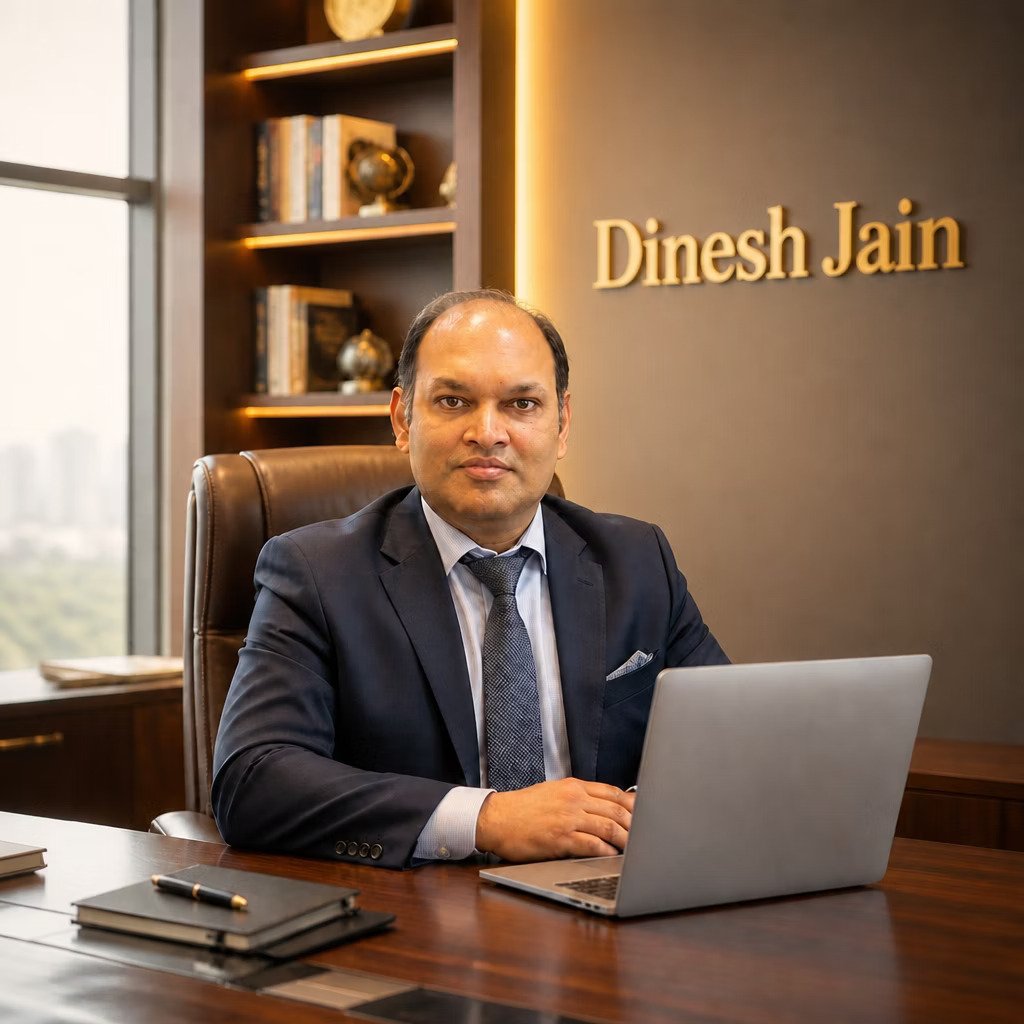
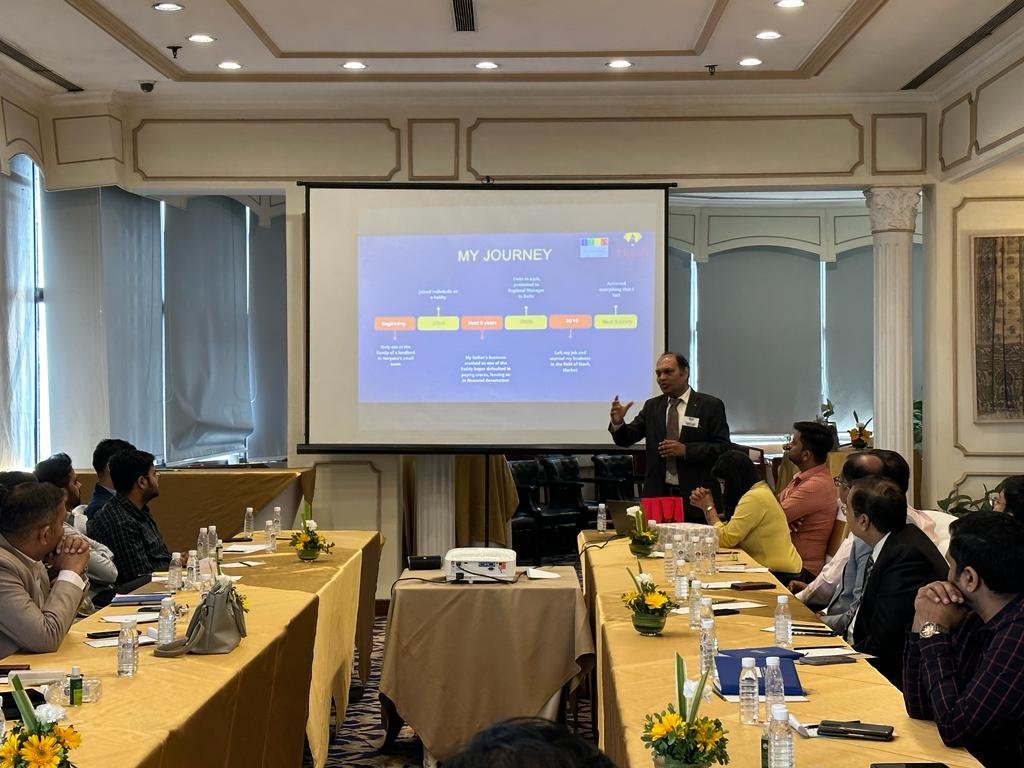
I come from a business family in Haryana and have spent more than two decades working with investments and financial markets. My understanding of money is not purely academic — it is shaped by lived experience, including difficult experience.
After completing my post graduation, I joined Indiabulls in 2004 — initially just for something to do. But what began as a way to pass time quickly became my Career. I discovered a genuine passion for financial markets and investment, and that passion drove my growth within the organization. Over the years, I rose from the ground level to Branch Manager, and eventually to AVP (Associate Vice President) — a journey that gave me deep, hands-on expertise in how financial markets really work.
Meanwhile, My family's own business suffered a major financial setback when an exporter failed to repay several crores of rupees. That experience changed permanently the way I looked at money, risk, and the consequences of decisions made without adequate safeguards. I learned a lesson that has never left me: interest can build wealth — or destroy it when risk is ignored.
In 2010, I started my own investment business, building a practice grounded in the principle that financial advice must serve the client's real interests — not the advisor's commissions. Then, in 2014, my spiritual mentor Shri Arun Chander Ji Maharaj entrusted me with the responsibility of creating a platform where his followers could support one another. That journey gave me something rare and valuable: deep investment expertise combined with hands-on experience of Trust leadership from the inside.
Through my work with charitable institutions over the years, I observed a consistent pattern: many Trusts are excellent at serving society, but their treasury management is not given the same level of systematic attention as their core mission work. That gap became my purpose. To help Trusts manage their charitable capital with greater discipline, transparency, and responsibility — so that every rupee of donor money reaches its highest potential.
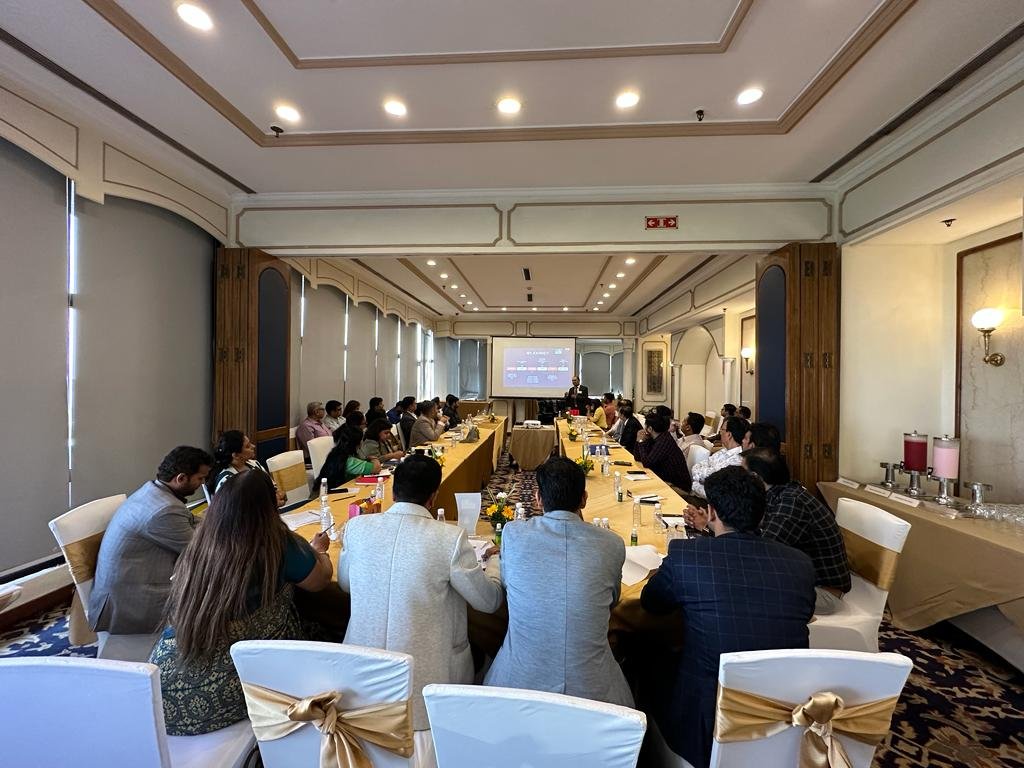


Most financial advisors understand markets but have never led a Trust from the inside. Most Trust leaders understand their mission but lack deep investment expertise. I bring both — and that combination is rare.
Many Trusts — even well-run, reputable institutions — share a set of common treasury challenges. These are not failures of character or intention. They are the predictable result of managing a complex financial function without a dedicated system. Recognizing these challenges is the first step toward addressing them.
Funds received from donors or accumulated over time sit in low-yield savings accounts, losing real value to inflation while better options remain unexplored.
Decisions about investments are made without a clear picture of what cash will be needed and when — creating avoidable liquidity stress.
Money is committed to fixed deposits or other instruments without mapping upcoming obligations, festivals, projects, or operational needs.
Regulatory requirements under Income Tax Act Section 11(5) and Trust Deed obligations are checked after investment decisions, rather than being built into the process from the start.
Treasury knowledge and decision-making rests with one or two individuals rather than a transparent, documented process that any trustee can understand and oversee.
There is no regular review of treasury performance, investment returns, liquidity position, or compliance status — leaving trustees without the information they need to govern effectively.
The cumulative result of these gaps follows a predictable and damaging pattern: Idle Funds → Missed Opportunities → Liquidity Stress → Governance Challenges. There is a better way — and it begins with a clear framework.
The Trust Treasury Excellence Framework™ is a simple, structured system designed specifically for Trusts, Foundations, and charitable institutions. It is not a product to be sold or a one-time consultation — it is a complete management framework that transforms how a Trust thinks about, manages, and monitors its treasury.
Managing a Trust's money is not simply about finding an investment. It is about answering three fundamental questions that every trustee and finance committee should be able to answer clearly and confidently at any point in time.
Defining the principles and objectives that guide every treasury decision your Trust makes.
Establishing a repeatable, compliant process for making investment and cash management decisions.
Measuring treasury performance against clear indicators so trustees can govern with confidence.
The Framework answers these three questions through three interconnected foundations that work together as a single treasury management cycle. Each foundation builds on the previous one, creating a system that is principled, process-driven, and performance-oriented.
The result is a treasury that is not dependent on any single individual — but on a system that any trustee, finance committee, or auditor can understand, follow, and trust.
Before making any treasury decision, trustees need to be clear about what they are trying to achieve. The Four Pillars are the foundational principles that guide every treasury decision — from routine cash management to major investment choices. They do not prescribe specific products or strategies. They provide a clear, principled framework for evaluating every financial decision your Trust makes.
When trustees internalize the Four Pillars, treasury decisions become less dependent on individual judgment and more grounded in institutional principle. The question shifts from "What should we invest in?" to "Does this decision serve our principles?" That shift makes all the difference.

Protect donor money first. The primary responsibility of a Trust is the responsible stewardship of funds entrusted to it. Every treasury decision must begin with the protection of capital. This means evaluating risk carefully, choosing instruments with appropriate credit quality, and never exposing the institution to losses it cannot afford. Donors give because they trust. That trust must be honored.
Keep money available when it is needed. A Trust may have substantial investments and still face a cash-flow problem if funds are not accessible at the right time. Liquidity planning means mapping what money is needed now, what will be required in the coming months, and what may be needed for planned projects, festivals, or emergencies — and ensuring those needs can always be met.
Generate reasonable returns to preserve purchasing power. Money that is not required immediately may be managed as surplus, subject to applicable requirements and the Trust's objectives. The goal is not to chase the highest possible return. It is to manage surplus funds prudently so that their real value is preserved — supporting the Trust's mission not just today but over the long term.
Every decision should be properly governed and compliant. Treasury decisions must be aligned with the Trust Deed, Income Tax Act Section 11(5), the internal Investment Policy, appropriate Board and Committee approvals, and thorough documentation. Compliance is not a box to check — it is a discipline that protects the institution, its trustees, and its beneficiaries.
Knowing the principles is not enough. A Trust also needs a repeatable, structured process for translating those principles into actual decisions. Without a process, even well-intentioned trustees make decisions that are inconsistent, undocumented, or poorly timed. The Treasury Operating System™ — TOS™ — is that process.
The TOS™ converts treasury management from a series of individual, ad hoc decisions into a disciplined, institutional system. It creates a clear sequence of steps that every treasury decision follows — from identifying cash requirements to monitoring investments after they are made. When this system is in place, the Trust is no longer dependent on one person's knowledge or judgment. The process itself carries the institution forward.
Map current and upcoming cash requirements to understand what funds are available and when they are needed.
Calculate the surplus available beyond operational needs — the funds eligible for structured investment.
Select appropriate instruments aligned with the Four Pillars — safety, liquidity, growth, and compliance.
Confirm every decision aligns with the Trust Deed, Section 11(5), and the Investment Policy before proceeding.
Obtain the required Board or Committee approvals and ensure all decisions are properly documented.
Implement the decision, record it accurately, and monitor ongoing performance against the institution's objectives.
Each step in the TOS™ has a specific purpose, and skipping any one of them creates the exact vulnerabilities that most Trusts currently face. The discipline of following the process — every time, for every decision — is what separates a well-governed treasury from one that relies on luck.
A Trust cannot improve what it cannot clearly see. Without a structured way to view treasury information, trustees must rely on scattered reports, individual updates, and informal conversations to understand the financial position of the institution. Important issues go unnoticed. Decisions are made without full information. The Treasury Dashboard changes this entirely.
The Dashboard brings critical treasury information together in one place, giving trustees a clear, real-time view of the institution's financial health. It is not simply a report to be filed away — it is an active decision-making tool that enables trustees to ask better questions and make more informed choices at every board meeting.
How much money is currently available across all accounts and instruments?
How much money will be needed and when — mapped against the operating calendar?
After all requirements are accounted for, how much can potentially be put to work?
Is sufficient liquidity maintained for unexpected needs and contingencies?
Where is the Trust's money invested — and is the allocation aligned with the Four Pillars?
Are all investments and processes aligned with applicable statutory and internal requirements?
Instead of asking "How are our investments doing?" trustees can now ask deeper, more meaningful questions: How much cash do we genuinely need? How much is truly surplus? Are we adequately liquid? Are we on track to meet our treasury objectives? What needs attention this quarter? The Dashboard transforms treasury from a passive function into an active pillar of governance.
The three foundations of the Trust Treasury Excellence Framework™ are not separate systems to be implemented independently. They are designed to work together as one integrated treasury management cycle — each building on the previous, each reinforcing the next. When all three are in place, the Trust has a complete treasury system that is principled, disciplined, and measurable.
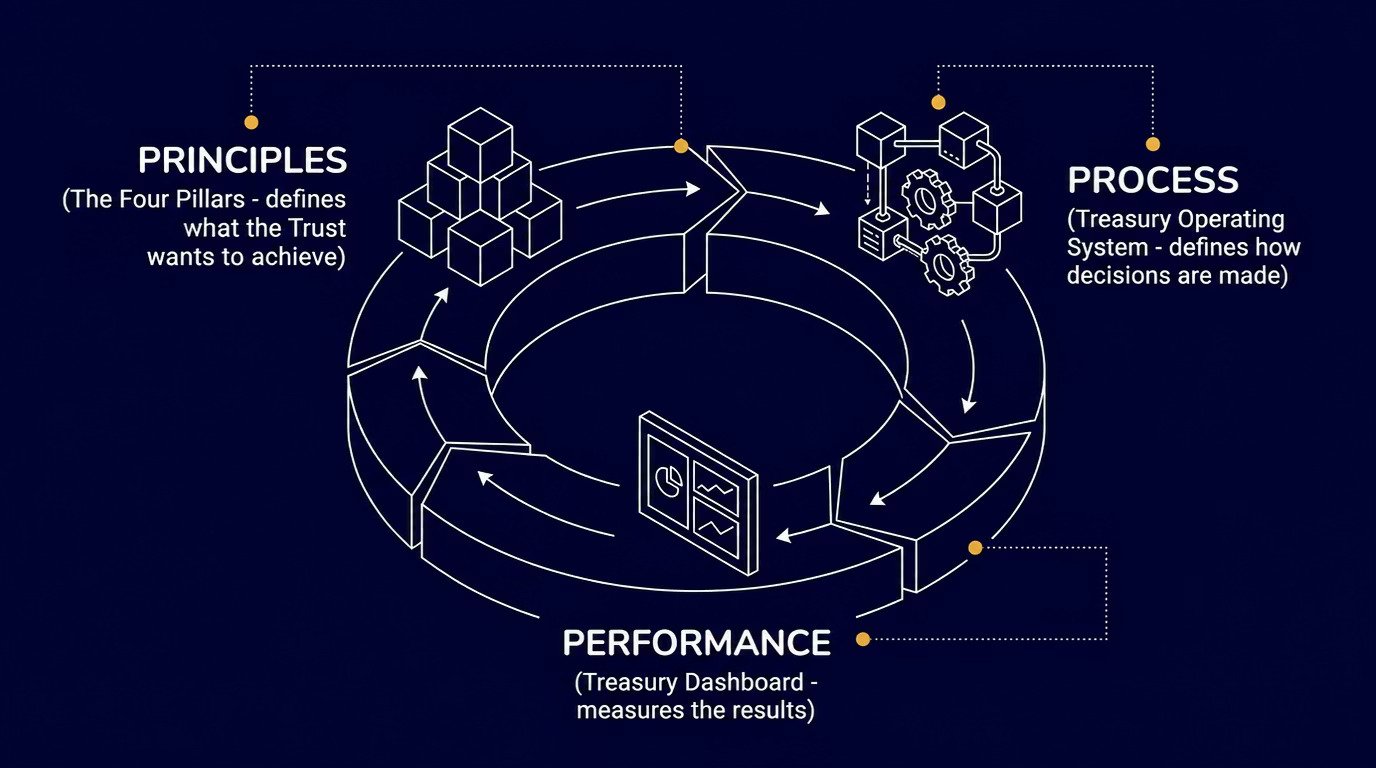
The Principles define the destination — what the Trust's treasury is trying to achieve. The Process defines the route — how every decision is made, validated, and approved. The Performance measurement confirms whether the journey is on track — and surfaces the insights needed to course-correct when it is not. Together, they create a treasury that is transparent, accountable, and capable of supporting the Trust's mission for years to come.
Theory becomes most meaningful when grounded in real experience. In January 2024, I was invited by a temple trust to review their financial position. On the surface, the situation appeared comfortable: 5 Crore Rsin Fixed Deposits, 1 Crore in the bank, 2 Lakh in monthly operating expenses, and a major festival function requiring 25 Lakh in September.
The question the trustees initially brought to me appeared straightforward: “Where should we invest?” But as with most treasury situations, the real question was far more important — and had not yet been asked: “How much can actually be invested without affecting the temple's future requirements?”
Using the Treasury Operating System™, we worked through each step methodically. We mapped the cash requirements across daily operations, the upcoming September function, and contingency reserves. We determined the genuinely investable surplus. We evaluated suitable investment options aligned with the Four Pillars. We validated compliance with Section 11(5). We obtained proper governance approval . Then Executed and then established an ongoing monitoring schedule.
“The best treasury decision starts with understanding the requirement — not the investment product.”
The outcome was not simply a set of investment recommendations. It was a complete treasury system the temple's trustees could understand, follow, and build on. The process itself became the institution's asset — not any single investment choice.
A complimentary Treasury Review is the ideal first step for any Trust that wants to assess the current state of its treasury management honestly and without commitment. In the review, I examine your institution's current position across the key dimensions of the Framework and identify where the most meaningful improvements can be made.
To get started, simply share the following basic information about your Trust. You do not need to have everything perfectly organized — a general picture is enough for an initial review.
Basic information about your institution — type, size, years established, and primary activities.
A general view of where your funds are currently held — Fixed Deposits, savings accounts, and other instruments.
Your operating budget, major commitments, upcoming events, and any known future capital requirements.
How investment decisions are currently made — who is involved, what approvals are required, and what documentation is maintained.
I will review the information, identify potential areas for improvement, and share my observations with you — clearly, practically, and without jargon. There is no sales pitch. There is no obligation. There is simply a professional assessment of where your Trust stands and what a stronger treasury system could look like.
The ultimate measure of excellent treasury management is not an investment return or a compliance score. It is the difference made in the lives of the people your Trust exists to serve. When funds are managed with discipline and purpose, the mission of the institution is protected and amplified — today, and for every generation that follows.
Structured, principled, compliant, and continuously monitored.
Capital protected. Liquidity maintained. Surplus working effectively.
Every rupee fulfilling its purpose — serving the mission your Trust was created to advance.